

 简体中文
简体中文 
Services & Logistics Info
Customized Packaging
+US$200/unit
Logo/Graphic Customization
+US$10/unit
Warranty Period
1 year
Warranty Period for Core Components
1 year
Sales Unit
Single item (Minimum order: 1 unit)
Gross Weight per Batch
2,500 kg
Delivery Time
About 60 working days
Basic Device Parameters
Model
LWS400*1800
Treat capacity
2-15 T/H
Bowl Diameter
400mm
Bowl Speed
3650 rpm
Product Application
Three-phase tricanter centrifuges are widely many oil-water-sludge separation process :
Plant oils: soybean oil, peanut oil, rapeseed oil, olive oil, avocado oil, palm oil , algal oil, food waste oil, etc.;
Animal oils: beef tallow, chicken fat, fish oil, insect tallow; Mineral oils: drilling oil, tank bottom oil, gutter oil, waste diesel, engine oil
Plant oils: soybean oil, peanut oil, rapeseed oil, olive oil, avocado oil, palm oil , algal oil, food waste oil, etc.;
Animal oils: beef tallow, chicken fat, fish oil, insect tallow; Mineral oils: drilling oil, tank bottom oil, gutter oil, waste diesel, engine oil
Product Information
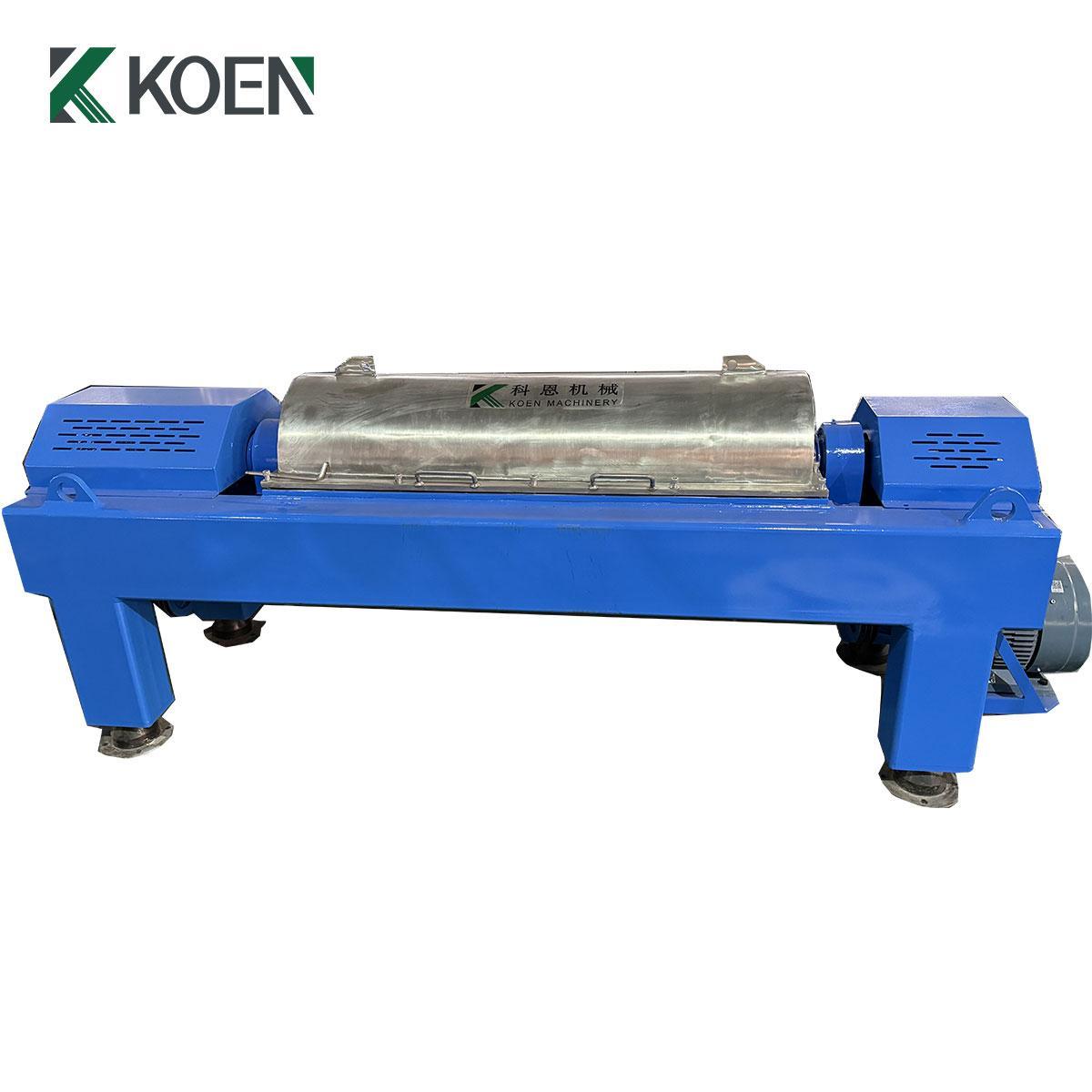
3 phase tricanter centrifuge
Tricanter centrifuge achieves continuous oil-water-solid separation through the high-speed utilizing centrifugal force.
Basic Working Principle
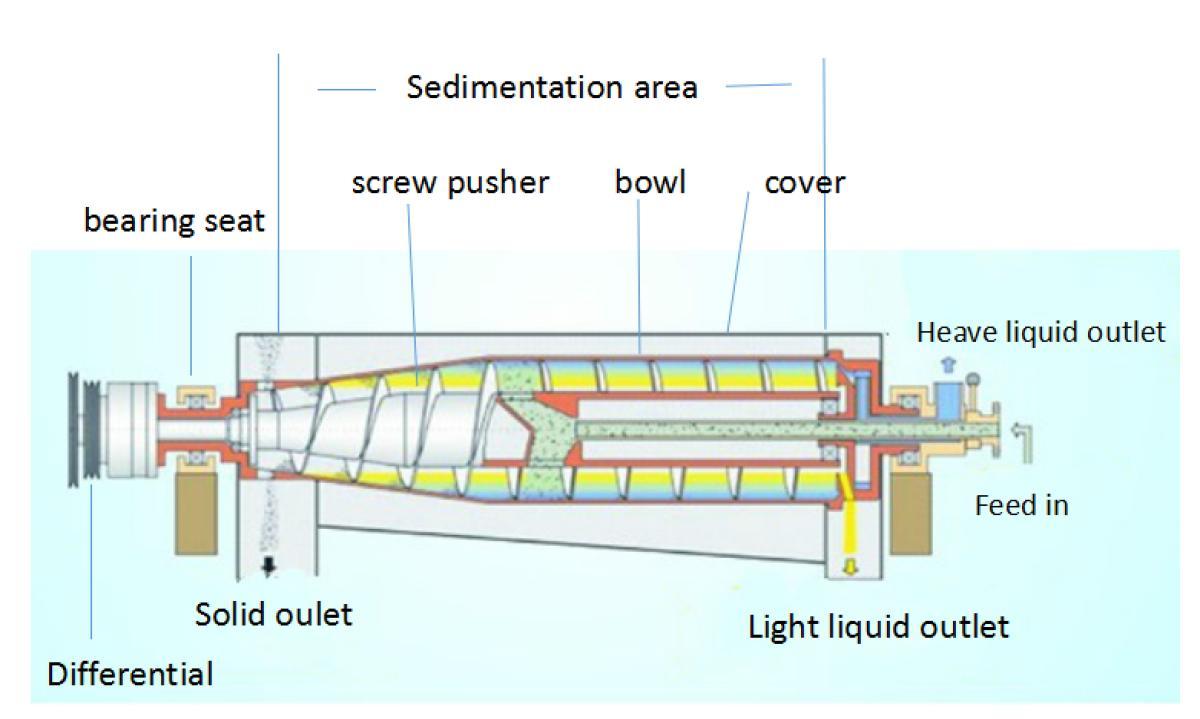
The core components of a vertical screw centrifuge consist of a rotating drum and a screw conveyor. The material is continuously fed into the inner cylinder of the screw conveyor via the feed pipe and is accelerated before entering the high-speed rotating drum. Under the powerful centrifugal force generated by the rotation of the drum, denser solid particles settle on the inner wall of the drum, forming a solid phase layer, while less dense liquids form a liquid phase layer located inside this solid phase layer. The screw conveyor operates with a specific differential speed relative to the rotating drum; it continuously pushes the solid material deposited on the drum's inner wall toward its smaller end, discharging it from the machine through the solid discharge port; meanwhile, the liquid phase is discharged through the overflow port at the drum's larger end. This design enables the vertical screw centrifuge to perform continuous feeding, separation, washing, and unloading even at full operating speed, thereby achieving highly efficient solid–liquid separation.
Design feature:
Centrifugal drum: High-speed rotation generates centrifugal force to separate solids from liquids.
Spiral conveyor: rotates at a speed slightly lower than that of the drum, pushing solid materials toward the discharge outlet.
Solid-phase discharge port: Discharges deposited solid particles.
Liquid outlet: For discharging the separated liquid.
Adjustable overflow weir plate: used for regulating liquid flow rate and improving separation efficiency
Basic Working Principle
The core components of a vertical screw centrifuge consist of a rotating drum and a screw conveyor. The material is continuously fed into the inner cylinder of the screw conveyor via the feed pipe and is accelerated before entering the high-speed rotating drum. Under the powerful centrifugal force generated by the rotation of the drum, denser solid particles settle on the inner wall of the drum, forming a solid phase layer, while less dense liquids form a liquid phase layer located inside this solid phase layer. The screw conveyor operates with a specific differential speed relative to the rotating drum; it continuously pushes the solid material deposited on the drum's inner wall toward its smaller end, discharging it from the machine through the solid discharge port; meanwhile, the liquid phase is discharged through the overflow port at the drum's larger end. This design enables the vertical screw centrifuge to perform continuous feeding, separation, washing, and unloading even at full operating speed, thereby achieving highly efficient solid–liquid separation.
Design feature:
Centrifugal drum: High-speed rotation generates centrifugal force to separate solids from liquids.
Spiral conveyor: rotates at a speed slightly lower than that of the drum, pushing solid materials toward the discharge outlet.
Solid-phase discharge port: Discharges deposited solid particles.
Liquid outlet: For discharging the separated liquid.
Adjustable overflow weir plate: used for regulating liquid flow rate and improving separation efficiency
Schematic diagram