


 简体中文
简体中文 
Services & Logistics Info
Customized Packaging
Customzied
Logo/Graphic Customization
Customzied
Warranty Period
1 year
Warranty Period for Core Components
1 year
After-Sales Service System
Video technical support
Sales Unit
Single item (Minimum order: 1 unit)
Single Carton Dimensions
200 × 140 × 260 cm
Gross Weight per Batch
2800 kg
Delivery Time
About 60 working days
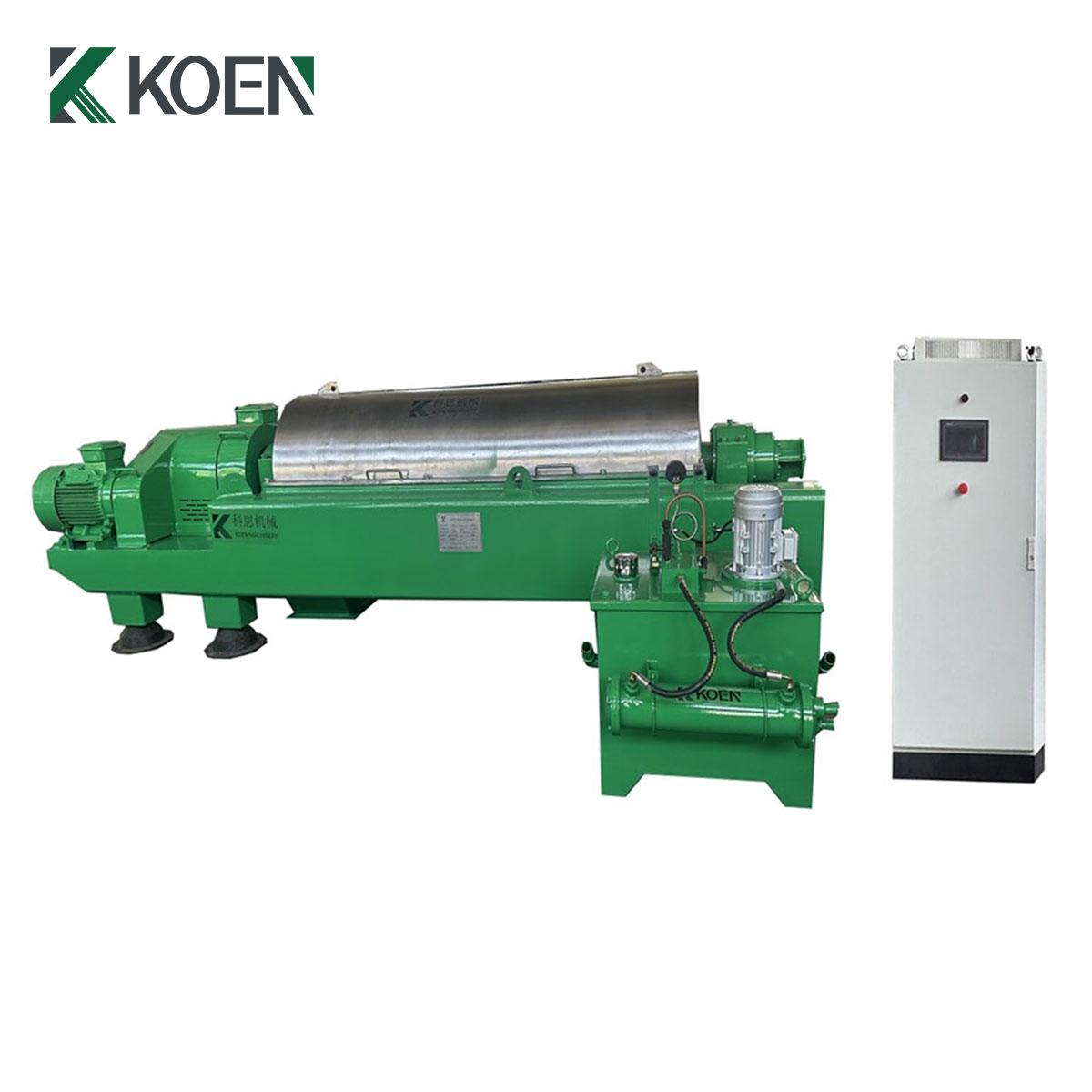
Product Specifications
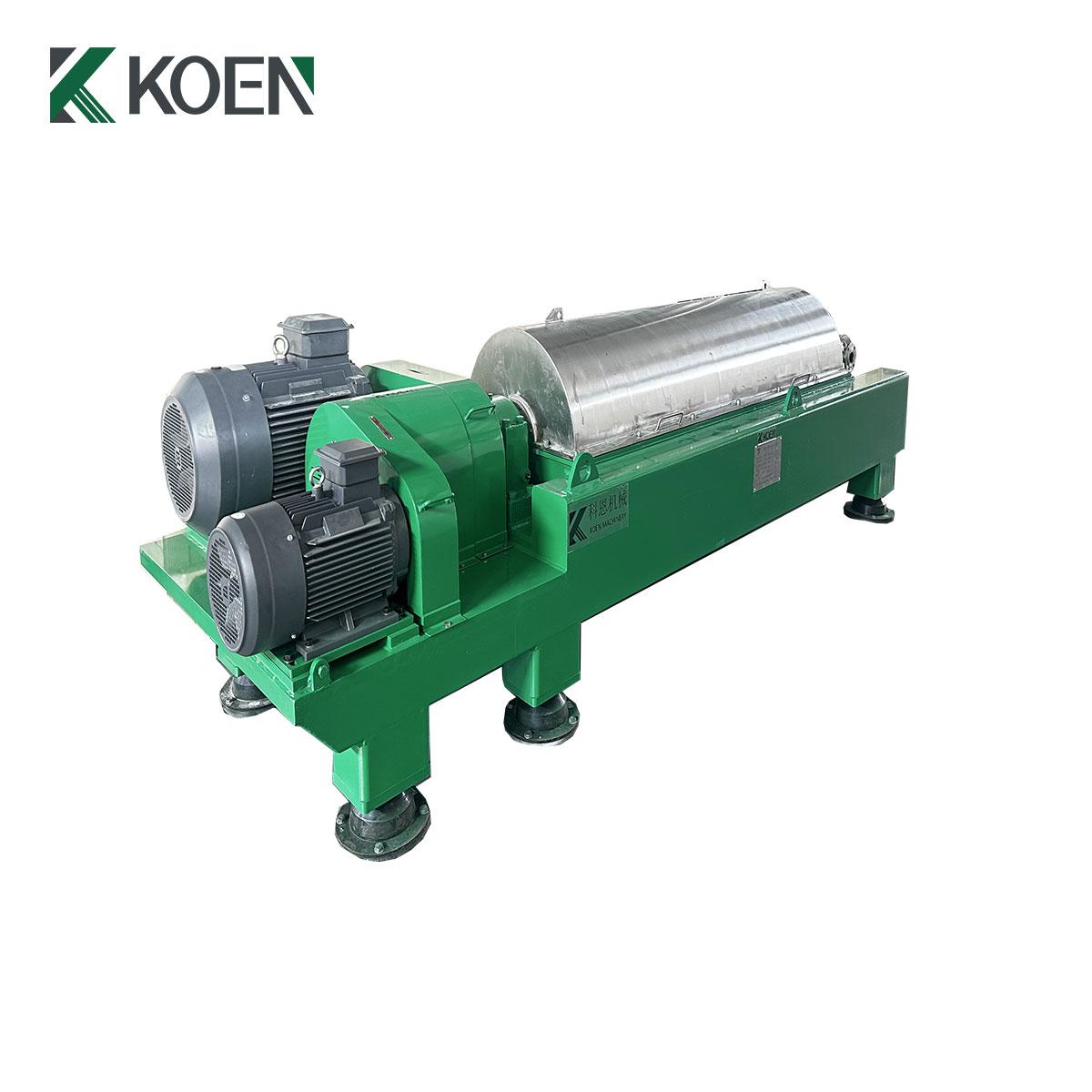
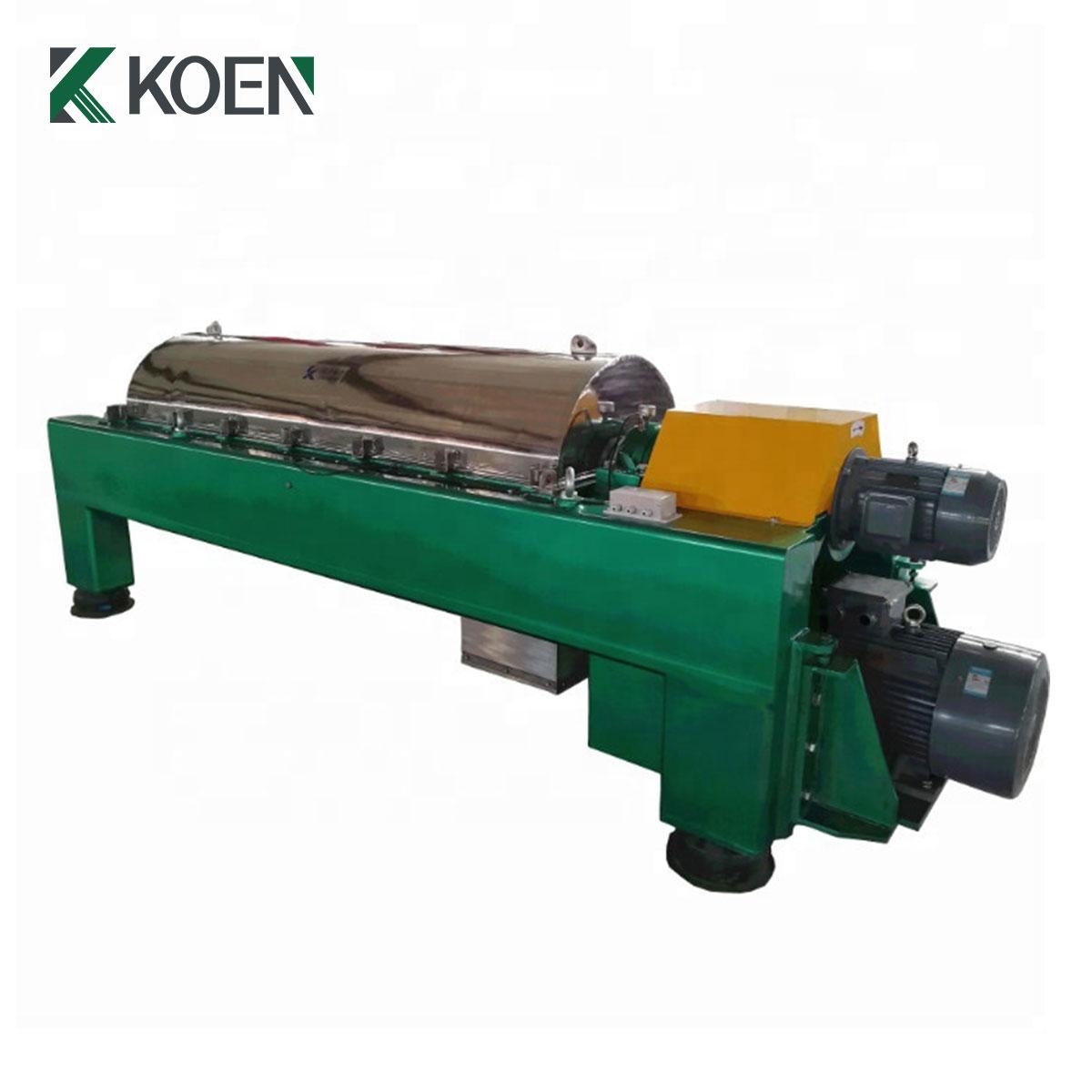
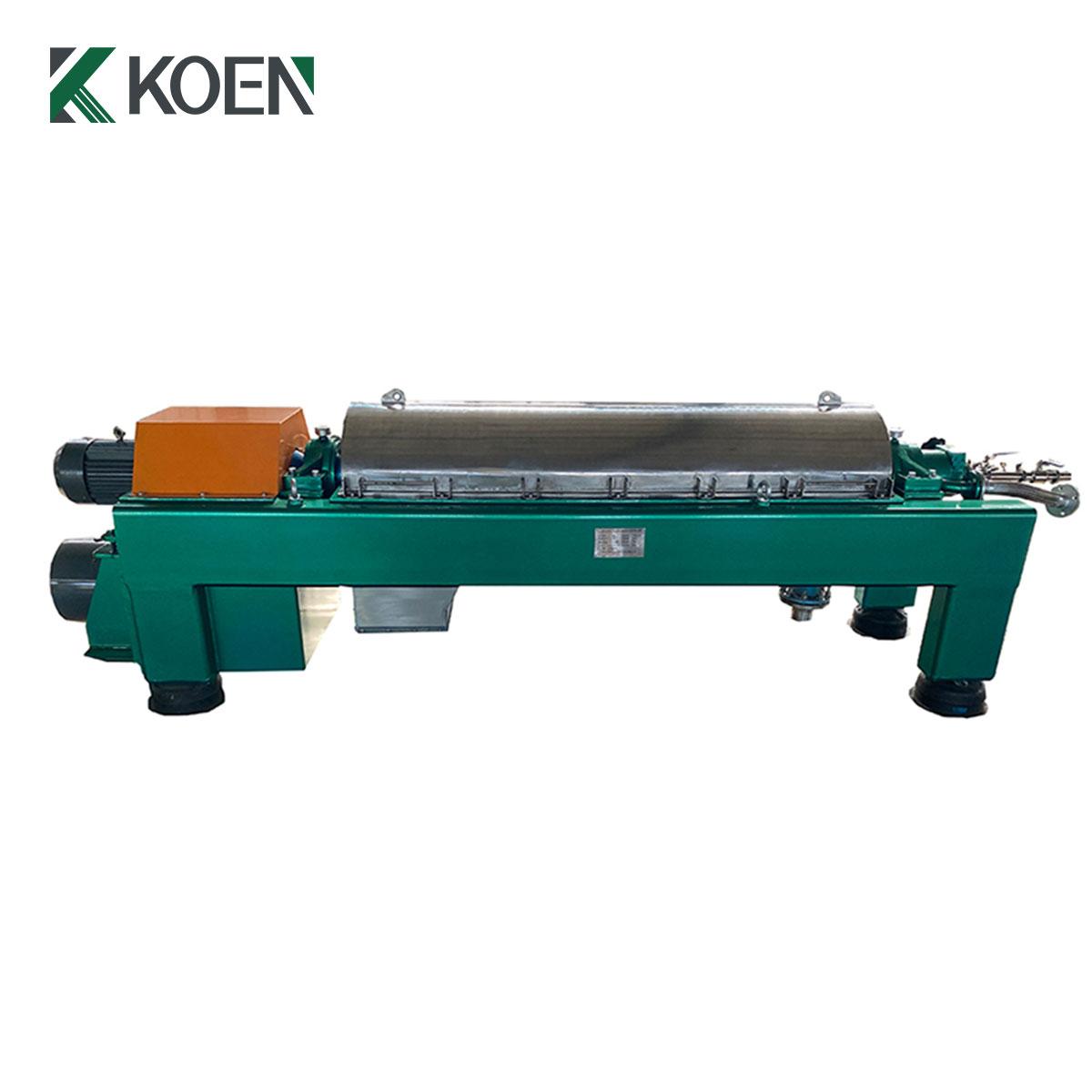
Model
LW355*1600
Processing Capacity
500 – 5000 L/h
Bowl Diameter
355 mm
Bowl Speed
3500 rpm
Centrifual force
2435G
Differential speed
5~30rpm
Bearing
NSK/SKF
Solid moisture
≤50%
Machine size
3400 * 921*1223mm L*W*H
Voltage
Customized
Machine Weight
2400kg
Total Power
22.5Kw
Product Application
Horizontal spiral decanter centrifuges are widely applied across numerous industries, including but not limited to:
1.Chemical and Light Industry: Titanium dioxide, starch, citric acid, gypsum slurry, diatomite, waste oil purification, etc.
2.Pharmaceutical and Food Industry: Soy protein, peanut protein, fruit juice, beverages, fermentation broth, etc.
3.Environmental Protection & Sewage Treatment: Sludge dewatering for industrial and domestic wastewater treatment. It can reduce sludge moisture content from 98% to approximately 80%, cutting sludge volume by roughly 10 times.
4.Textile and Machinery Industry: Dewatering of yarn bundles and textile products, as well as liquid phase clarification.
5.Metallurgy and Mining Industry: Coal flotation, bauxite processing, ore classification, etc.
1.Chemical and Light Industry: Titanium dioxide, starch, citric acid, gypsum slurry, diatomite, waste oil purification, etc.
2.Pharmaceutical and Food Industry: Soy protein, peanut protein, fruit juice, beverages, fermentation broth, etc.
3.Environmental Protection & Sewage Treatment: Sludge dewatering for industrial and domestic wastewater treatment. It can reduce sludge moisture content from 98% to approximately 80%, cutting sludge volume by roughly 10 times.
4.Textile and Machinery Industry: Dewatering of yarn bundles and textile products, as well as liquid phase clarification.
5.Metallurgy and Mining Industry: Coal flotation, bauxite processing, ore classification, etc.
Product Information
Horizontal Screw Decanter Centrifuge
Basic Working Principle
The core components of a decanter centrifuge are the drum and the screw conveyor. Materials are continuously fed into the inner cylinder of the screw through the feed pipe, accelerated, and then enter the high-speed rotating drum.
Under the powerful centrifugal force generated by the drum’s rotation, solid particles with higher density settle on the inner wall of the drum to form a solid phase layer, while lower-density liquid forms a liquid phase layer inside the solid layer.
The screw conveyor rotates at a differential speed relative to the drum. It continuously pushes the solid materials deposited on the drum’s inner wall toward the small end of the drum for discharge through the solid outlet. The liquid phase, meanwhile, exits the machine via the overflow port at the large end of the drum.
This design enables the decanter centrifuge to perform continuous feeding, separation, washing and discharging at full operating speed, delivering high-efficiency solid-liquid separation.
The core components of a decanter centrifuge are the drum and the screw conveyor. Materials are continuously fed into the inner cylinder of the screw through the feed pipe, accelerated, and then enter the high-speed rotating drum.
Under the powerful centrifugal force generated by the drum’s rotation, solid particles with higher density settle on the inner wall of the drum to form a solid phase layer, while lower-density liquid forms a liquid phase layer inside the solid layer.
The screw conveyor rotates at a differential speed relative to the drum. It continuously pushes the solid materials deposited on the drum’s inner wall toward the small end of the drum for discharge through the solid outlet. The liquid phase, meanwhile, exits the machine via the overflow port at the large end of the drum.
This design enables the decanter centrifuge to perform continuous feeding, separation, washing and discharging at full operating speed, delivering high-efficiency solid-liquid separation.
Operation & Batch Processing Notes
Solid Accumulation: Solids are retained and collected inside the high-speed rotating bowl. Batch Discharge: Once the separation cycle is completed, the machine must be stopped, and the bowl removed for manual solids discharge and cleaning. Batch Capacity: For feeds with approx. 1% solid content, each batch can process around 100–150 L of material. Variable Factors: Actual throughput varies depending on liquid viscosity, particle size, density differences, and feed rate.
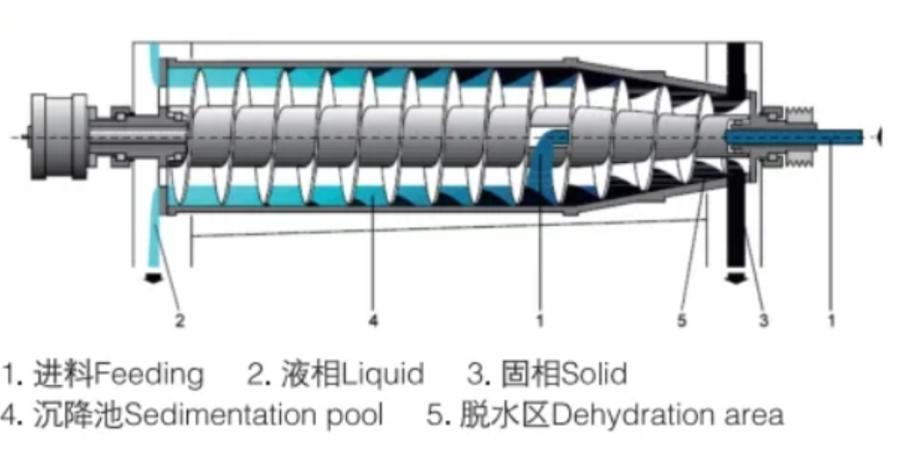
Working Principle of Tubular Centrifuge
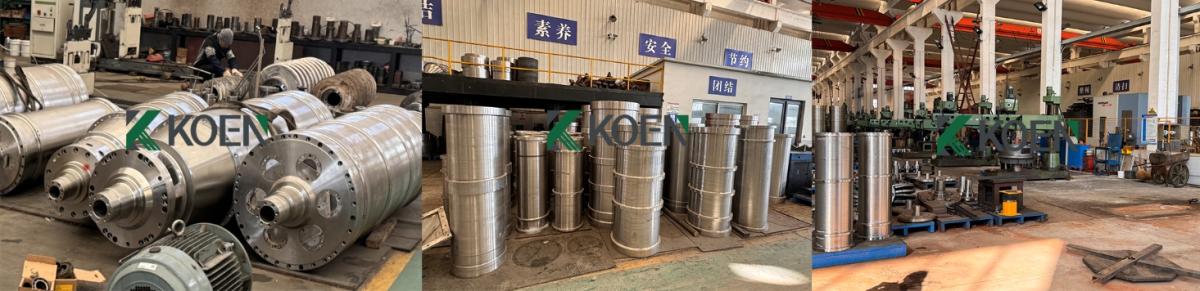
Factory
Download
JDOFJOEJF
PDF / 2.25 MB
Simplified Chinese, English


